Quick Wins: The Best Real Estate CRM for Solo Agents in 2026
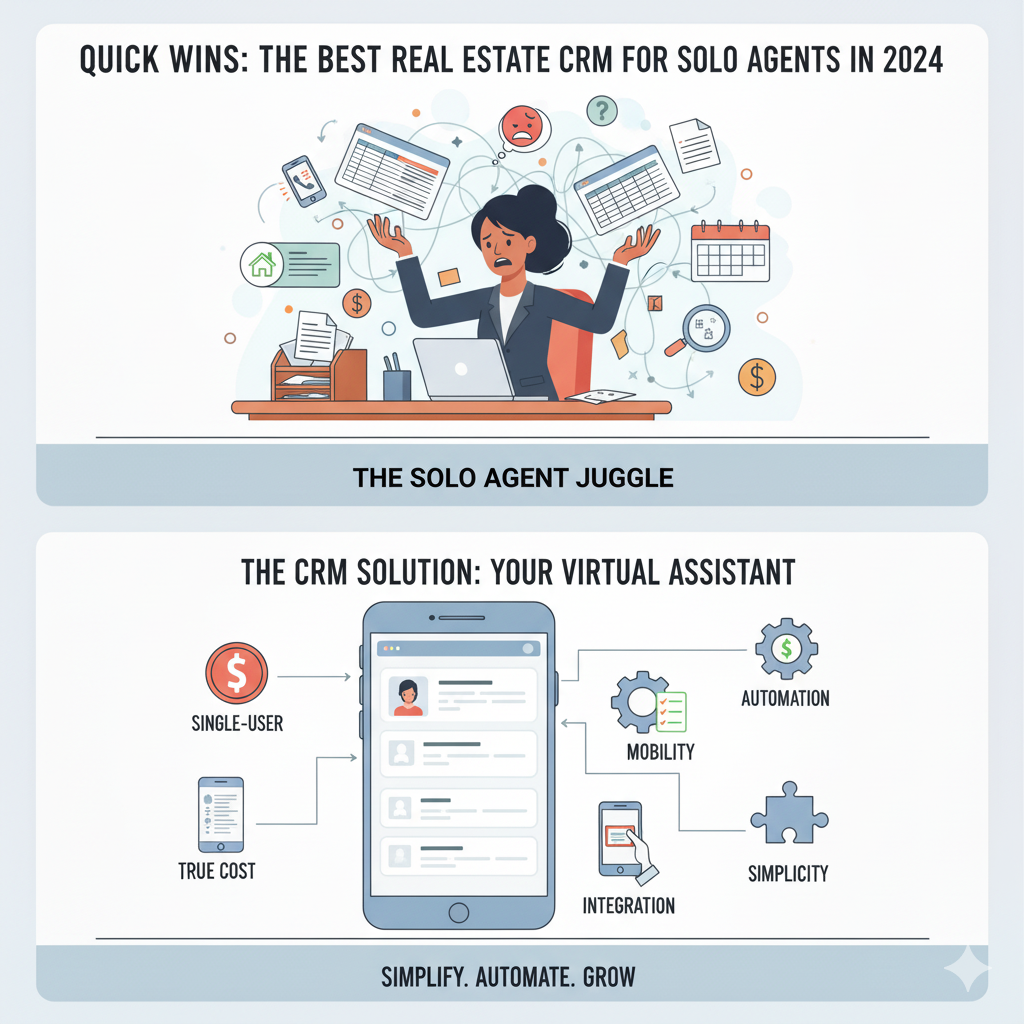
The life of a solo real estate agent is a demanding juggling act. You are the CEO, the marketing department, the lead generator, the administrator, and the closing expert. Unlike large teams with dedicated staff, you can’t afford complexity, high subscription fees, or wasted time.
Your CRM needs to act as your virtual assistant—powerful enough to manage hundreds of contacts but simple enough to master in an afternoon.
Choosing the best Real Estate CRM for solo agents is a strategic decision that directly impacts your profitability. The wrong platform is cumbersome and expensive; the right one is the key to scaling your business without hiring a team.
Why the Best CRM for Solo Agents Must Be Different
A CRM designed for a 50-person brokerage is fundamentally flawed for a solo agent. Those systems are built for complex hierarchy, advanced reporting, and team-based communication—features a solo agent simply doesn’t need, but often pays dearly for.
When you are choosing a CRM for solo agents, your focus must be on three core pillars: Simplicity, Automation, and Cost-Effectiveness. If the platform fails any of these tests, it will ultimately become shelfware.
Here are the five non-negotiable features that define a successful solo agent CRM.
1. Pricing: Prioritize Single-User, All-Inclusive Tiers
Solo agents often get penalized by tiered pricing structures designed for large teams. Look for systems that offer a highly competitive single-user license that doesn’t restrict essential features.
- Avoid Per-Seat Escalation: Ensure the price jump is minimal if you eventually add a single assistant or buyer’s agent.
- All-Inclusive Features: The best plans for solo users should include unlimited contacts, essential email marketing, and full mobile app access without forcing you onto a higher tier. If a platform restricts necessary automation or integration features on its entry-level plan, it’s not truly designed for a solo business owner.
2. Implementation: Simplicity Over Everything
Time spent learning software is time taken away from listing presentations and client calls. A solo agent must be able to adopt a new system in less than a day.
- Minimal Setup Required: Look for systems with pre-built real estate pipelines and contact categories. You shouldn’t need a developer or two weeks of training to get started.
- Intuitive Interface: The dashboard and navigation should be clean and uncluttered. If it takes more than two clicks to log a call or find a client history, the system is too complex and will lead to low adoption. The best Real Estate CRM for solo agents keeps the user focused on the next actionable task.
3. Automation: Your 24/7 Virtual Assistant
Since you don’t have an assistant, your CRM must handle the repetitive, low-value administrative tasks. This is where a good system earns its keep.
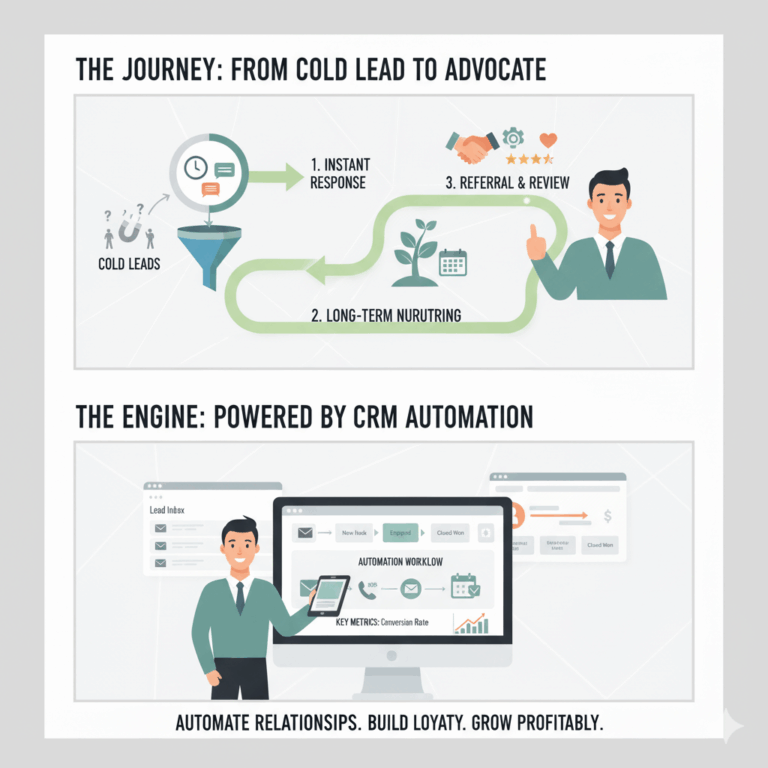
- Automated Lead Routing & Response: The system must instantly capture leads from your portals (like https://www.google.com/search?q=realestate.com.au or Domain) and immediately trigger a personalized “I’m busy but will call you soon” text or email. This guarantees a near-instant response time, winning you business while you’re in a showing.
- Task Management & Reminders: It must automatically create follow-up tasks based on deal status. For example, once you mark a lead as “Viewing Booked,” the CRM should create a reminder to call them 24 hours before the viewing and 48 hours after for feedback.
- Drip Campaigns: The ability to set up simple, long-term email sequences for past clients and cold leads is essential for hands-off relationship nurturing.
4. Mobility: Power in Your Pocket
The mobile app is arguably the most important feature for a solo agent who is constantly on the move. Your entire office needs to be available in your pocket.
- Dedicated Native App: Look for a robust, fast app (not just a mobile-friendly website) that is optimized for call logging and note-taking.
- Voice-to-Text Notes: The ability to verbally dictate meeting notes into the client profile immediately after a client interaction is a massive time saver and dramatically improves data accuracy.
- Offline Functionality: If you are showing a basement or an area with poor signal, the app must allow you to log data that syncs automatically when you regain connection.
5. Integration: Seamless Ecosystem
Since you have to manage everything—from contracts to social media—your CRM for solo agents must play well with others.
- Email Sync: Ensure flawless, automatic two-way synchronization with your primary email and calendar.
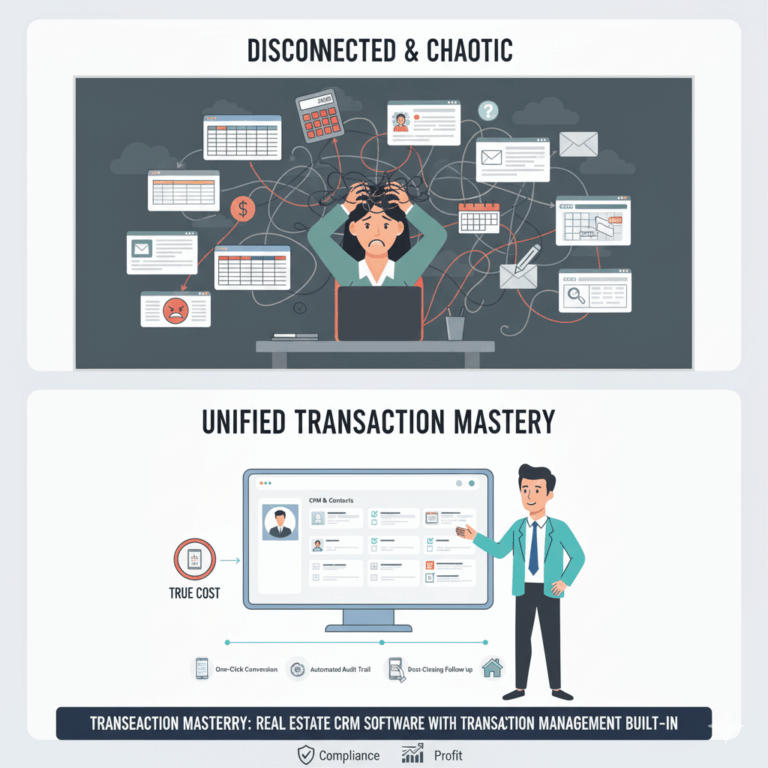
- Document Integration: The ability to link directly to cloud storage (Google Drive, Dropbox) or integrated transaction management tools is critical for closing and compliance.
- Referral Network Management: The system should have simple fields dedicated to tracking referral sources and ensuring you never miss a touchpoint with the individuals who send you the most business.
The Long-Term Vision: Scaling with Your Solo Agent CRM
When choosing a Real Estate CRM for solo agents, many worry that selecting a “simple” platform will limit their future growth. This is a myth. The most scalable systems are those that are easy to adopt and master from the start.
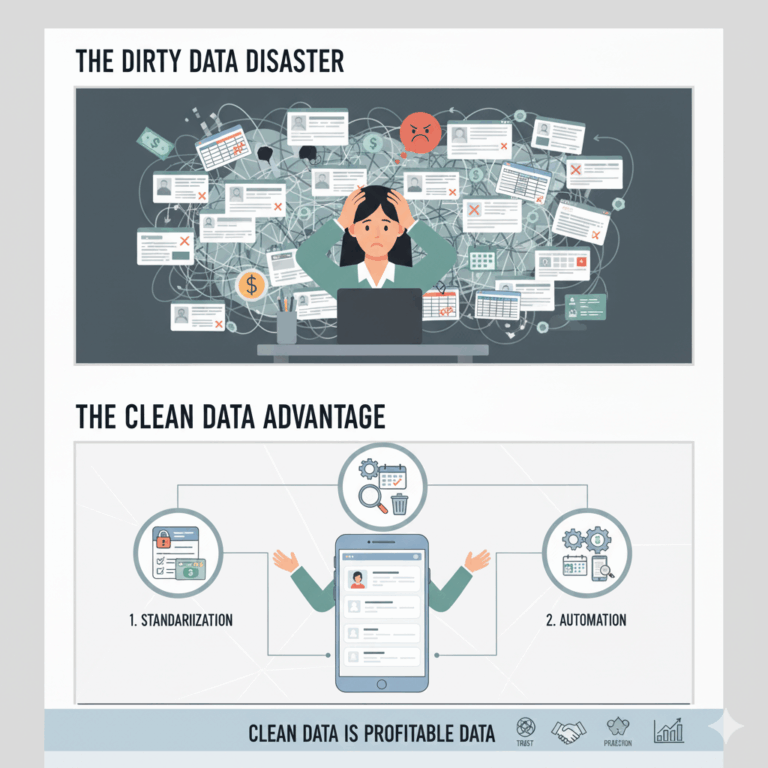
By prioritizing automation and clean data from Day One, you are building a solid foundation. When you eventually hire an admin, you won’t need to rebuild your process; you’ll simply hand them the streamlined system your CRM for solo agents has already perfected.
Ultimately, the best choice is the one that gets used every single day, not the one that looks prettiest in the demo. By focusing on low cost, high automation, and rock-solid mobility, you will find the tool that helps you win more deals and finally gain back control of your precious time.