Open Home Lead Capture Automation Crm
Open Home Lead Capture Automation CRM: How Australian Agencies Stop Losing Buyers at the Front Door
Every Saturday morning, thousands of Australian real estate agents unlock a property, set out the brochures, and welcome a stream of buyers through the door. By Monday, half those visitors have vanished into a spreadsheet no one updates, a paper sign-in sheet stuffed into a folder, or worse — they exist only in an agent’s memory. If you are running a busy sales operation, juggling VPA reconciliation, manually double-entering buyer details between VaultRE or Rex and Realestate.com.au, and still trying to prepare compelling listing presentations before Thursday, the last thing you have time for is chasing down 34 open home registrations with individual follow-up texts. This is precisely why open home lead capture automation crm has become the operational standard for high-performing Australian agencies in 2024 — and why every principal who has not yet implemented it is handing competitors a significant head start.
- Why Do Traditional Open Home Sign-In Processes Fail Australian Agents?
- What Is Open Home Lead Capture Automation CRM and How Does It Work?
- Step-by-Step: How to Implement Open Home Lead Capture Automation in an Australian Agency
- How Does Open Home Lead Capture Automation CRM Compare to Manual Admin?
- Case Study: How a Gold Coast Agency Reclaimed 18 Hours Per Week With Agent AI
- Why Is Data Quality at the Point of Open Home Entry the Most Underrated Revenue Lever?
- How Does Open Home Lead Capture Automation CRM Handle Privacy and Compliance in Australia?
- How Does Automated Open Home Data Feed Into Vendor Reporting and Pricing Feedback?
- Agent AI: The Invisible Infrastructure Running Your Agency Backend on Autopilot
- Frequently Asked Questions About Open Home Lead Capture Automation CRM
- Stop Losing Buyers at the Front Door — Book Your Agent AI Discovery Call
Why Do Traditional Open Home Sign-In Processes Fail Australian Agents?
Traditional open home sign-in sheets fail because they create a dead data gap between the physical inspection and the agency’s CRM. Paper registers are illegible, digital kiosks without backend integration produce orphaned records, and manual re-entry — which REIA studies consistently show takes 2–4 hours per agent per weekend — introduces errors, delays, and lost follow-up opportunities across Realestate.com.au and Domain-sourced buyers.
The Australian residential property market is intensely competitive. According to CoreLogic’s 2024 national auction clearance data, properties in Sydney, Melbourne, and Brisbane regularly attract 15 to 40 groups through a single open home. Each of those groups represents a potential buyer, a future vendor, a referral source, or a rental prospect. The conventional process — handing a clipboard to a buyer, collecting a form, then re-entering that data into Rex or VaultRE by Sunday night — is not just inefficient. It is commercially negligent.
Consider what typically happens. The agent is busy greeting new arrivals, answering questions about the property’s council zoning, and managing a buyer who wants a second look at the master bedroom. The sign-in pad sits unattended. A buyer writes an unreadable mobile number. Another buyer skips the email field entirely. A third buyer uses a Gmail address they never check. By the time the data is uploaded into the CRM on Sunday evening, the buyers who walked through that door at 11:14am have already attended two more open homes run by competing agencies who had instant SMS follow-up sequences firing within four minutes of their departure.
PropTrack’s 2023 buyer behaviour research found that prospective purchasers in Australia’s capital cities attend an average of 12 open homes before making a formal offer. That means your window to establish a meaningful relationship is 1 in 12 — and it closes fast if your first follow-up arrives 48 hours after the inspection rather than four minutes after it.
What Is Open Home Lead Capture Automation CRM and How Does It Work?
Open home lead capture automation CRM is a technology layer that digitally captures buyer registration details at the inspection, instantly validates mobile numbers and emails, cross-references the visitor against the existing database to prevent duplicates, and automatically triggers personalised follow-up sequences — all without any manual data entry from the agent or their PA.
The architecture behind a genuine open home lead capture automation crm system involves several interconnected processes working simultaneously. When a buyer registers on a digital pad at an open home, the system immediately runs a mobile number validity check, stripping formatting errors and verifying the number format against Australian carrier prefixes. It then searches the existing contact database for any matching record — by mobile number, email address, or name variant — and either creates a new contact profile or appends the new inspection event to the visitor’s existing timeline.
Within moments of the open home closing, the system dispatches a personalised SMS or email to every verified attendee, thanking them for visiting and inviting feedback. That same data is simultaneously linked to the property listing record, updating the vendor dashboard with attendance figures, buyer sentiment indicators, and the number of contacts who have now been reached by post-inspection follow-up. The agent arrives at their Monday morning briefing with a complete, clean, actionable picture of every buyer who walked through the door — without having entered a single record manually.
Agent AI’s open home visitor check-in module within the Property Intelligence system performs live mobile number verification at the point of registration, cross-matches new visitors against the full contact database, and immediately links confirmed attendees to the relevant listing record. This is not a data import — it is a real-time synchronisation that treats every open home as a live data event rather than a paper exercise to be digitised later.
Step-by-Step: How to Implement Open Home Lead Capture Automation in an Australian Agency
Implementing an open home lead capture automation CRM process in an Australian agency requires a structured workflow connecting digital registration hardware, CRM synchronisation, automated communications, and vendor feedback reporting into a single, repeatable operating procedure that runs identically whether the agent is present or not.
Below is the complete workflow an Australian agency should follow when deploying a fully automated open home lead capture process using Agent AI as the backend infrastructure.
- Configure the Listing Record in Agent AI: Before the first open home is published, ensure the property record in Agent AI is complete — title type, tenure, land size, council zone, and the listing agent’s calendar are all populated. Agent AI’s Lifecycle State Automation will advance the property status to Active Listing automatically once the record is marked ready, and the open home times will sync to the agent’s external calendar via two-way Google or Outlook integration.
- Publish Open Home Times to Portals: Agent AI’s Multi-Portal Listing Push exports the confirmed open home times directly to Realestate.com.au and Domain. Any buyer who has set a property alert on either platform is notified automatically. Inbound inquiry emails generated by portal activity are captured and linked directly to the property file.
- Set Up the Digital Registration Pad: At the open home, deploy a tablet running Agent AI’s live check-in interface. The system runs real-time mobile number verification as buyers enter their details, flagging invalid entries immediately so the agent can request a correction on the spot rather than discovering the problem during Monday’s data entry.
- Run Visitor Matching Against the Full Database: As each buyer checks in, Agent AI checks their mobile number, email address, and name against every existing contact in the CRM. A buyer who attended a previous open home two months ago is recognised, and the new inspection is appended to their interaction timeline — including the specific property they just viewed. A completely new contact is created with a fresh profile, automatically tagged by behavioural data based on the property’s price point and features.
- Trigger Automated Post-Inspection Follow-Up: Within minutes of the open home closing, Agent AI dispatches personalised SMS and email follow-ups to every verified attendee. These messages are not generic blasts — the Dynamic Property Merging feature in the Communication Studio drops the specific property address and a feedback invitation into each message. The High-Deliverability Communication Studio’s spintax engine rotates message variations across the contact list to bypass carrier filtering.
- Capture Feedback and Sentiment Data: Buyer replies to the follow-up SMS or email — whether they express strong interest, price concern, or request a private inspection — are automatically analysed by the AI Reply Sentiment Analysis engine. Each respondent is scored and tagged accordingly, and the agent receives a prioritised call list ranked by buyer intent before their Monday morning begins.
- Update the Vendor Dashboard: All attendance data, feedback responses, and offer activity are compiled into a real-time vendor report accessible directly from the property record. The vendor can see exactly how many buyers attended, what the market sentiment is, and what the agent has done in response — without the agent having written a single manual report.
- Activate Nurture Sequences for Non-Responders: Any checked-in buyer who does not respond to the initial follow-up within the defined window is automatically enrolled in Agent AI’s Automated Cold Lead Nurturing track, receiving hyper-local suburb property reports over the following weeks — keeping the agency top-of-mind until that buyer is ready to transact.
How Does Open Home Lead Capture Automation CRM Compare to Manual Admin?
When comparing open home lead capture automation CRM against traditional manual workflows, Australian agencies consistently find that automation eliminates between 8 and 15 hours of weekly administrative overhead, reduces data entry errors by over 80%, and accelerates the speed-to-follow-up from 24–48 hours down to under five minutes — directly correlating with higher buyer conversion rates across Realestate.com.au and Domain-sourced leads.
| Task | Manual Workflow | With Agent AI | Time Saved Per Week |
|---|---|---|---|
| Open home visitor registration | Paper clipboard or standalone tablet with no CRM sync; data manually re-entered on Sunday evening | Digital check-in with real-time mobile validation and instant CRM synchronisation at point of entry | 2.5 hours |
| Post-inspection follow-up SMS and email | Agent manually texts or emails each attendee Monday morning; typically only top 5–10 contacts contacted | Automated personalised SMS and email dispatched to 100% of verified attendees within minutes of open home closing | 3 hours |
| Duplicate contact detection and merging | PA manually checks for existing records; duplicates frequently missed, leading to conflicting data | AI Merging cross-references mobile, email, and name variants automatically; zero duplicate records created | 1.5 hours |
| Vendor open home feedback report | Agent compiles attendance numbers and buyer feedback manually, usually by phone call or handwritten note | Live vendor dashboard updated automatically with attendance, sentiment scores, and follow-up activity | 2 hours |
| Buyer intent scoring and call list prioritisation | Agent uses gut instinct or memory to decide who to call first on Monday | Dynamic Task Prioritisation ranks the call list by intent signals, response behaviour, and time elapsed | 1 hour |
| Portal listing update and open home publishing | Office admin manually updates Realestate.com.au and Domain with open home times and any price changes | Multi-Portal Listing Push syncs times, pricing changes, and media assets to all portals automatically | 1.5 hours |
| Non-responder nurture enrolment | Non-responsive open home attendees are rarely followed up beyond the initial contact; lead is lost | Unresponsive contacts automatically enrolled in hyper-local suburb report nurture sequences | 2 hours |
| Private inspection scheduling for high-intent buyers | Agent phones each high-intent buyer to manually arrange a time; calendar conflicts common | Direct Appraisal Booking Links sent automatically to high-intent buyers; buyer self-books into agent’s live calendar | 1 hour |
Case Study: How a Gold Coast Agency Reclaimed 18 Hours Per Week With Agent AI
This Gold Coast agency case study demonstrates how integrating Agent AI into open home operations delivers measurable time recovery, administrative cost reduction, and GCI uplift by transforming manual Saturday workflows into a fully automated data pipeline that continues working after the agent locks the front door and drives away.
A boutique Gold Coast agency with four sales agents and one part-time property manager was running a high-volume weekend open home schedule — typically 12 to 18 inspections every Saturday. Their existing process involved paper sign-in sheets at each property, a shared Google Sheet that the PA updated each Sunday afternoon, and manual SMS follow-ups that the agents sent on a best-efforts basis from their personal phones on Sunday evening or Monday morning.
The problems were visible and measurable. The PA was spending six hours every Sunday re-entering open home data. Duplicate records in their Rex CRM were multiplying. Agents were only following up their top five to eight contacts from each property — the ones they personally remembered as engaged — while the remaining 70% of attendees received no contact at all until the next week’s property report, if they were lucky. The agency’s listing presentation win rate had plateaued, partly because vendors were receiving verbal summaries rather than data-backed feedback reports, which made it difficult to demonstrate the agency’s marketing rigour when competing against larger franchise operations for premium listings.
After integrating Agent AI into their backend workflows, the transformation was immediate and quantifiable. The PA’s Sunday data entry workload dropped from six hours to under 30 minutes — she now reviews exception flags rather than transcribing records. The four sales agents each recovered an average of three hours per week in follow-up administration. Total weekly time reclaimed across the team: 18 hours. The agency redirected that time into proactive prospecting calls, additional listing presentations, and a structured doorknock programme in their core suburbs.
Within the first quarter following implementation, the agency increased their listing volume by 22% and reduced their average days-on-market by eight days — a figure the principal attributed directly to faster buyer identification and more professional vendor communication enabled by real-time open home data. Their annual GCI increased by approximately $210,000, while the reduction in PA overtime and external data-entry costs saved roughly $28,000 in admin overhead for the year.
One of the four agents noted that the automated buyer nurture sequences running on non-responsive open home attendees generated two listings in the first six months — both from owners who had originally attended an open home on a neighbouring property six to eight weeks prior and been quietly nurtured by suburb property reports until they were ready to discuss their own sale. This is precisely the kind of compounding pipeline value that manual processes structurally cannot deliver.
It is worth contextualising this performance against broader market data. According to the REIA’s 2023 Real Estate Industry Facts, the average Australian agency closes between 40 and 60 residential transactions per year. An 18-hour weekly time recovery across a four-agent team represents the equivalent of reclaiming approximately two full-time working days per week — capacity that can be entirely redirected into revenue-generating activities.
Why Is Data Quality at the Point of Open Home Entry the Most Underrated Revenue Lever?
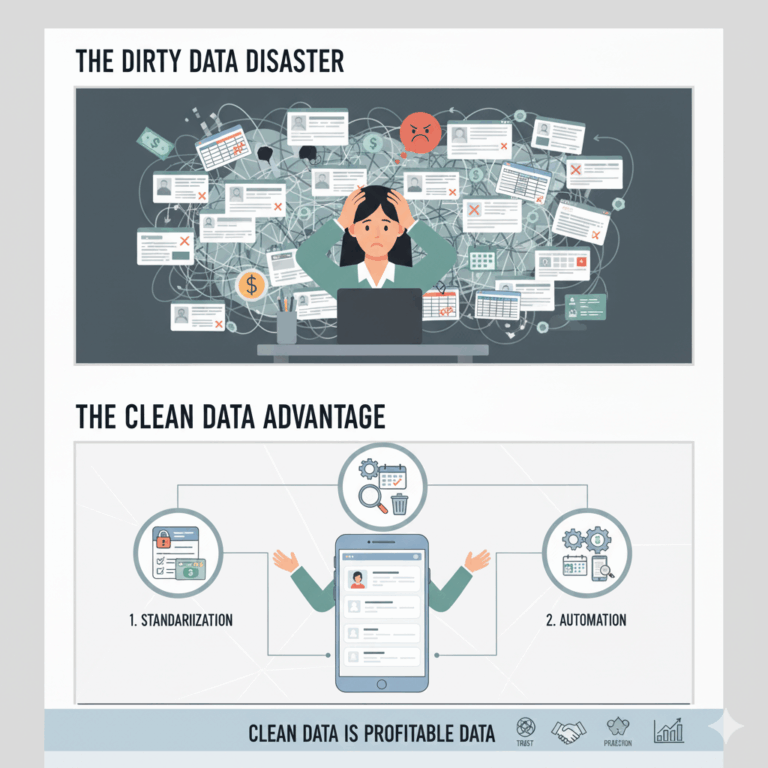
Data quality at the point of open home registration is the most underrated revenue lever in Australian real estate because a single bad mobile number or duplicate contact record silently breaks every downstream automation — nullifying follow-up SMS delivery, corrupting vendor attendance reports, and causing the agency to miscount the active buyer pool against CoreLogic’s market depth benchmarks.
Most principals focus on the volume of leads generated from Realestate.com.au and Domain. Few track the percentage of those leads that are actually contactable six weeks later. This distinction matters enormously. If an agency registers 240 open home visitors across a month and 40% of those records contain an invalid or undeliverable mobile number, the agency is effectively operating with 96 phantom contacts — people who attended a property, showed measurable intent, and then became permanently unreachable because the data was never validated at entry.
Agent AI’s AI Mobile Validation and Cleanup engine within the Advanced Messaging module addresses this directly. Rather than validating records in a weekly batch or relying on bounce data to identify bad numbers after a campaign has already failed, the system performs real-time delivery validity checks as each new registration is submitted. Invalid numbers are flagged immediately — at the open home, while the buyer is still standing in the living room — giving the agent one clean opportunity to request a correction rather than discovering the problem six days later.
This also has compounding value for the agency’s long-term database health. According to ABS household movement data, approximately 11% of Australians change their mobile number or primary email address each year. In a database of 5,000 contacts, that represents 550 contacts drifting towards uncontactability annually. Agent AI’s Automated Dead-Record Purification module runs low-frequency validation check-ins to flag and archive dead numbers, ensuring the agency’s active contact pool remains genuinely actionable rather than inflated by stale records that skew pipeline projections.
For principals considering a platform comparison, our detailed Rex software review outlines where traditional CRM platforms fall short on real-time data validation and why the absence of automated validation at point-of-entry creates compounding data quality problems over time.
How Does Open Home Lead Capture Automation CRM Handle Privacy and Compliance in Australia?
A compliant open home lead capture automation CRM in Australia must automatically track Do Not Call register status, email unsubscribe requests, and SMS opt-out responses across every outbound communication — because under the Australian Privacy Act 1988, the Spam Act 2003, and the Do Not Call Register Act 2006, non-compliance during automated follow-up campaigns carries significant legal and reputational consequences for real estate agencies.
The compliance architecture in an effective open home lead capture automation crm system must operate globally — meaning a contact who unsubscribes from a property report email sent by one agent in the agency must be immediately recognised as an unsubscribe across all future communications from any agent in the same business. This is not a technical luxury. It is a legal requirement under the Spam Act 2003, which defines commercial electronic messages and mandates functional unsubscribe mechanisms that take effect within five business days.
Agent AI’s Global Compliance and Opt-Out Guardrails within the Dynamic Contact Ingestion module handle this comprehensively. Do Not Call statuses, email unsubscribes, and SMS opt-outs are tracked globally across all campaigns and all agents within the agency. When a buyer responds to an automated post-open-home SMS with “STOP”, the Strict Privacy Opt-Out Guardrails within the Advanced Messaging module detect the keyword instantly and permanently block that number from all future automated broadcasts — regardless of which agent or campaign subsequently attempts to contact them.
For agencies managing both a sales operation and a rent roll, this compliance layer is particularly important. A tenant who opts out of marketing communications related to an investment property they are renting must not subsequently receive unsolicited communications about other listings in the area. Agent AI’s Unified Interaction Timeline and global opt-out architecture ensures this boundary is maintained without requiring the agent to manually cross-check Do Not Call status before every message.
How Does Automated Open Home Data Feed Into Vendor Reporting and Pricing Feedback?
Automated open home data feeds directly into vendor reporting by compiling real-time attendance figures, buyer sentiment scores, formal offer activity, and follow-up completion rates into a live vendor dashboard — giving the listing agent objective market feedback that replaces subjective verbal summaries and strengthens the agent’s authority when recommending price adjustments to the vendor.
One of the most consistent pain points reported by Australian real estate principals is the difficulty of having the pricing conversation with a vendor when the only evidence available is anecdotal — “we had a good crowd” or “buyers seem to like it.” When an agent can present a vendor with quantified data showing that 31 groups attended across two open homes, 18 were followed up within five minutes, nine responded with feedback, three requested the contract of sale, and two indicated the property is above their ceiling budget, the conversation about price adjustment becomes a data-led briefing rather than a subjective negotiation.
Agent AI’s Buyer Tracking and Pricing Feedback feature within the Property Intelligence module captures buyer sentiment, formal offer amounts, contract section views, and inspection ratings continuously throughout the campaign, feeding this data into a live vendor report that updates automatically. The Secure Property Document Vault stores every piece of formal documentation — contracts of sale, building and pest inspection reports — directly inside the property record, giving the vendor and their legal representatives a single verified source of truth.
This real-time feedback infrastructure also supports the broader listing presentation workflow. When an agent is preparing a market appraisal for a prospective vendor in the same street, Agent AI can surface comparable sales data linked directly to properties in the agency’s own transaction history — providing a level of localised evidence that supplements the CoreLogic and PropTrack data used in formal comparative market analyses. For a detailed look at how automated CMA tools integrate with this workflow, our guide to instant comparable sales report real estate CMA outlines the specific architecture involved.
For agencies managing investment properties alongside their residential sales operation, the same data pipeline that captures open home attendees also supports landlord communication workflows. Our resource on lease renewal automation property management explores how the same backend infrastructure extends into the rental cycle, creating a single source of truth across both divisions of the agency.
Agent AI: The Invisible Infrastructure Running Your Agency Backend on Autopilot
The most effective technology in a high-performing agency is the technology nobody notices because it never fails, never sleeps, and never needs to be reminded to do its job. This is the operating philosophy behind Agent AI — not a dashboard to manage, but an invisible infrastructure layer that runs your agency backend on autopilot.
When a buyer registers at your open home at 10:47am on a Saturday morning, Agent AI has already validated their mobile number, matched them against your database, linked them to the listing record, and queued their personalised follow-up message before you have finished answering their question about the property’s water rates. When the open home closes at 11:30am, the vendor receives an automatic attendance update. By 11:45am, every verified attendee has received a personalised follow-up. By Monday morning, the agent has a ranked call list ordered by buyer intent, not by memory.
This is not a collection of disconnected automation tools bolted together. It is a cohesive, event-driven orchestration system that treats every interaction — a check-in, a text reply, an email open, a contract download — as a live data signal that updates the contact’s profile, advances the pipeline stage, and adjusts the agent’s priority queue in real time. The agent’s job shifts from data entry and administration to what they were licensed to do: negotiation, relationship building, and winning listings.
The open home lead capture automation crm architecture within Agent AI connects Module B’s Property Intelligence check-in system, Module A’s Dynamic Contact Ingestion and AI Merging, Module F’s High-Deliverability Communication Studio, and Module G’s Advanced Messaging and SMS validation into a single, seamless workflow that requires zero manual intervention once the listing is active. The agent carries a tablet. The system does the rest.
For principals evaluating the broader competitive landscape of real estate CRM platforms in Australia, the difference between Agent AI and legacy systems is not a feature list comparison — it is a fundamentally different operational model. Traditional platforms store data. Agent AI acts on it.
Frequently Asked Questions About Open Home Lead Capture Automation CRM
What is the best open home lead capture automation CRM for Australian real estate agencies?
The best open home lead capture automation CRM for Australian agencies is one that performs real-time mobile validation at point of entry, cross-references new registrations against the full contact database to eliminate duplicates, automatically dispatches personalised post-inspection follow-ups, and feeds attendance and sentiment data directly into a live vendor report — without any manual data re-entry. Agent AI is purpose-built for this architecture, combining Property Intelligence check-in management, AI Contact Merging, High-Deliverability Communication Studio, and Advanced Messaging into a single, event-driven platform used by Australian agencies managing both sales operations and rent rolls.
How does open home lead capture automation CRM prevent duplicate contacts in a real estate database?
Open home lead capture automation CRM prevents duplicates by cross-referencing every new registration against existing records using multiple identifiers simultaneously — mobile number, alternative email addresses, and name variants. Agent AI’s AI Merging engine within the Dynamic Contact Ingestion module performs this match-and-merge automatically at the point of check-in, preserving all historical notes, interaction timelines, and past property visits under the single verified record rather than creating a conflicting second profile. This is a structural improvement over manual processes in Rex, VaultRE, or unintegrated digital kiosk systems where duplicates accumulate silently across every open home season.
How quickly should an open home lead capture automation CRM send follow-up messages to attendees?
PropTrack buyer behaviour research indicates that the optimal window for post-open home follow-up is within 10 minutes of the inspection closing. Buyers attending multiple properties in a single Saturday session — common in Sydney, Melbourne, and Brisbane — begin comparing agencies immediately after departing. An open home lead capture automation CRM that dispatches personalised SMS and email acknowledgments within five minutes of the open home closing consistently outperforms agencies delivering follow-up the following morning. Agent AI’s automated post-inspection follow-up sequence fires immediately when the open home status is marked closed in the system, ensuring no buyer walks away without a personalised touchpoint from the agency.
Is open home lead capture automation CRM compliant with Australian privacy and spam laws?
Yes, a properly configured open home lead capture automation CRM must be fully compliant with the Australian Privacy Act 1988, the Spam Act 2003, and the Do Not Call Register Act 2006. This requires global opt-out tracking — meaning an unsubscribe from any campaign immediately suppresses all future automated contact across every agent in the agency. Agent AI’s Global Compliance and Opt-Out Guardrails track DNC status, email unsubscribes, and SMS STOP responses globally, and the Strict Privacy Opt-Out Guardrails within the Advanced Messaging module permanently block opted-out contacts from all future broadcast streams in real time.
How does open home lead capture automation CRM improve vendor reporting for Australian listing agents?
Open home lead capture automation CRM improves vendor reporting by replacing subjective verbal summaries with objective, real-time market data. Agent AI’s Property Intelligence module compiles verified attendance numbers, buyer sentiment scores from post-inspection feedback responses, formal offer activity, and contract-of-sale download events into a live vendor dashboard that updates automatically throughout the campaign. This data-driven reporting model gives the listing agent objective evidence when recommending price adjustments to the vendor — a capability that distinguishes Agent AI-equipped agencies from competitors relying on CoreLogic or PropTrack comparables alone, and which REIWA identifies as a key factor in vendor satisfaction scores.
Stop Losing Buyers at the Front Door — Get Your Agency Running on Autopilot
Every open home your agency runs without a proper open home lead capture automation crm in place is a live revenue leak. The buyers who walked through your door on Saturday, left their details on a clipboard, and never heard from you by Monday morning are now under contract with the agent across the street who had an automated follow-up firing before they reached their car. That is not a technology gap. It is a GCI gap — and it compounds every single weekend.
Agent AI reclaims 15 or more hours per week for the average Australian sales agent by automating the full open home data pipeline — from real-time check-in validation through to vendor feedback reporting and buyer nurture sequences. That recovered time goes back where it belongs: prospecting new listings, preparing winning presentations, and being physically present on the doorstep of your next vendor’s home rather than behind a desk re-entering Saturday’s sign-in sheets.
If you are ready to stop running your agency on manual processes and start operating on the infrastructure that high-performance Australian agencies are already using, the next step is a single conversation.