
Agent Ai Vs Vaultre
Agent AI vs VaultRE: An Honest Operational Comparison for Boutique Principals
If you’re running a boutique real estate agency in Australia, you already know the drill. Monday morning arrives and you’re chasing VPA invoices from vendors who haven’t paid, manually re-keying portal inquiries into your CRM, building listing presentations in PowerPoint at 9pm, and fielding rent roll queries that should have been answered by your database hours ago. The debate around agent ai vs vaultre is not an abstract software discussion — it is a direct conversation about how many hours per week you are haemorrhaging to tasks that should happen automatically. This article gives you an honest, operational breakdown of where each platform sits, what VaultRE does well, where it falls short for growth-focused boutique principals, and why Agent AI represents a fundamentally different operating model for the modern Australian agency.
- What Is the Core Difference Between Agent AI vs VaultRE?
- What Does VaultRE Do Well for Australian Agencies?
- Where Does VaultRE Fall Short for Growth-Focused Boutique Principals?
- Agent AI vs VaultRE: A Head-to-Head Operational Comparison
- Step-by-Step: How a Boutique Agency Implements Agent AI
- Case Study: Boutique Gold Coast Agency Saves 18 Hours Per Week
- How Does Each Platform Handle Market Data and Behavioural Intelligence?
- Time-Saving Comparison Table: Manual vs Agent AI Workflow
- Agent AI: The Invisible Infrastructure Running Your Agency Backend
- Frequently Asked Questions About Agent AI vs VaultRE
- Ready to Reclaim Your Week?
What Is the Core Difference Between Agent AI vs VaultRE?
The fundamental difference in agent ai vs vaultre comes down to philosophy. VaultRE is a relational CRM — a structured database that stores and surfaces information when instructed. Agent AI is an event-driven orchestration engine that acts on data without human instruction, automatically moving contacts, triggering communications, and qualifying intent across every channel simultaneously.
VaultRE, built and headquartered in Perth, Western Australia, has established itself as one of the more widely adopted CRM platforms across independent agencies and REIWA member offices throughout the state. It offers a solid suite of contact management, listing workflow, and portal syndication tools that cover the operational basics competently. The interface is clean, the portal integrations with Realestate.com.au and Domain are reliable, and the feature set is broadly familiar to Australian agents who have used Rex, Agentbox, or similar platforms.
Agent AI, by contrast, was not designed as a CRM in the traditional sense. It was architected as a SaaS orchestration layer — a platform that ingests data from every touchpoint, analyses behavioural signals, executes automated communication sequences, and predicts intent without the agent needing to manually update a single field. Where VaultRE requires the agent to drive the system, Agent AI drives itself and surfaces what the agent needs to act on next.
This distinction is not marketing language. It is the operational reality that determines whether your agency functions reactively — responding to inquiries when they arrive — or predictively, knowing which vendor is ready to list before they call any competitor.
What Does VaultRE Do Well for Australian Agencies?
VaultRE delivers strong portal syndication, a clean contact card structure, and solid integration with Realestate.com.au and Domain for standard listing operations. For REIWA member agencies in Western Australia particularly, its local market familiarity, vendor-paid advertising invoice tools, and trust accounting adjacent workflows make it a dependable operational baseline for established teams.
Being fair to VaultRE is important in any honest agent ai vs vaultre analysis. The platform has earned genuine loyalty from Western Australian agencies for several legitimate reasons. Its listing workflow is straightforward — agents can move a property from appraisal through to sold with a manageable number of clicks, and the portal syndication to Realestate.com.au and Domain is reliable and well-maintained. VaultRE also includes email marketing capabilities, a mobile application, and basic automation features that cover the minimum requirements of a busy sales office.
For agencies that are not yet prioritising predictive analytics or automated intent qualification, VaultRE functions well as a structured record-keeping system. It records contact interactions, manages open home attendees, and supports a reasonable volume of bulk email communications. For a principal who is satisfied with a reactive operational posture, VaultRE meets the bar.
Where Does VaultRE Fall Short for Growth-Focused Boutique Principals?
In the agent ai vs vaultre debate, VaultRE’s primary limitation is passivity. It does not analyse inbound SMS sentiment, auto-qualify listing intent, stitch historical profiles to new portal leads, or score daily call lists by predicted conversion. These gaps force principals to manually perform the intelligence work the system should be doing, consuming 10–15 hours per week of billable prospecting time.
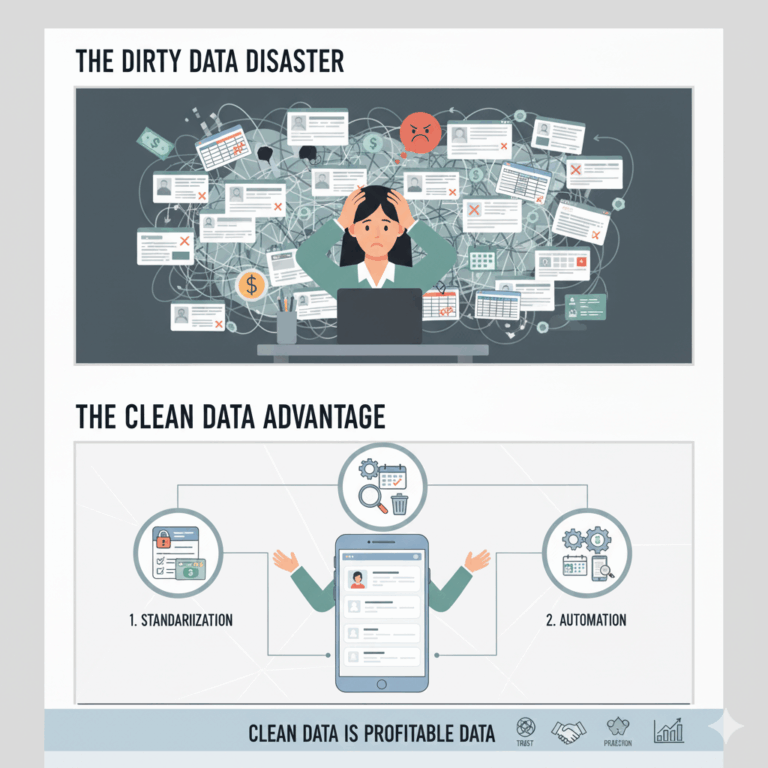
The most common pain point reported by principals who have migrated away from VaultRE is duplicate data. When a buyer checks into an open home via a portal QR code, then submits a separate inquiry form on the agency website, and then sends a direct SMS, VaultRE treats these as three separate contacts unless the agent manually identifies and merges them. Agent AI’s zero-duplicate AI merging resolves this automatically by cross-referencing mobile numbers, email addresses, and name variants without losing any prior communication history.
The second significant gap is the absence of true behavioural intelligence. VaultRE records what has happened — calls made, emails sent, properties inspected. Agent AI analyses what is likely to happen next. By examining the combination of email links clicked, SMS response times, inspection frequency, and price point engagement, Agent AI’s automated pipeline and intent projection produces a ranked list of contacts most likely to list or transact within the next 90 days. This is the functionality that shifts an agency from chasing leads to selecting them.
For principals who have explored the Agentbox vs Rex CRM comparison, the pattern is consistent across legacy platforms — they record history well but do not drive future action. VaultRE sits in this same category when assessed against a purpose-built orchestration engine.
The third gap is communication intelligence. VaultRE’s email tools send messages but do not dynamically optimise delivery timing based on individual contact behaviour, do not auto-detect out-of-office replies to pause sequences, and do not use spintax rotation to protect sender reputation across bulk campaigns. For a boutique agency with a database of several thousand contacts, these missing capabilities translate directly into lower open rates, higher spam classifications, and lost follow-up opportunities.
Agent AI vs VaultRE: A Head-to-Head Operational Breakdown
Comparing agent ai vs vaultre across six operational dimensions — data integrity, lead qualification, communication automation, calendar synchronisation, behavioural analytics, and compliance management — reveals a consistent pattern: VaultRE requires agent-driven inputs to function, while Agent AI operates as a self-executing engine that surfaces outcomes without manual prompting.
Let’s examine each dimension in concrete operational terms.
Data Integrity and Duplicate Management
VaultRE relies on agents identifying duplicates and manually merging records. In a busy boutique office processing 40 to 80 open home check-ins across a weekend, this creates a backlog that rarely gets resolved cleanly. Agent AI’s Dynamic Contact Ingestion module cross-references every new record against existing mobile numbers, alternative email addresses, and name variants in real time, merging duplicates automatically and preserving the unified interaction timeline without human intervention.
Lead Qualification and Intent Scoring
VaultRE captures inbound portal leads and creates contact records. It does not score them, rank them by intent, or automatically sequence follow-up based on lead type. Agent AI’s Lead Acquisition and Intent Qualification module analyses the inquiry message, cross-references the property asset, and scores each lead by motivation and listing likelihood, then automatically triggers the correct follow-up task sequence for the assigned agent. For principals concerned about zero-delay portal response automation, this distinction represents the difference between responding to a listing lead within seconds and responding the following morning.
Communication Automation
VaultRE includes email broadcast functionality and basic drip campaign features. These are sequential and static — they do not adapt based on recipient behaviour. Agent AI’s High-Deliverability Communication Studio tracks opens, clicks, and attachment views in real time, uses spintax rotation to protect bulk sender reputation, pauses sequences automatically when an out-of-office is detected, and delivers each message at the individually optimised time for that specific contact based on their historical digital behaviour. The practical result is materially higher open rates and more appointments booked from the same database volume.
Calendar and Resource Management
VaultRE has a calendar function with basic appointment logging. Agent AI’s Synchronised Operations module provides two-way live sync with Google Calendar and Microsoft Outlook, auto-populates open home sessions when a listing goes active, embeds AI travel time buffers between off-site appointments, and overlays transaction-critical legal deadlines — finance approval windows, building and pest inspection dates, settlement days — directly on the agent’s daily view. For a principal managing four to six active listings simultaneously, this removes an entire category of scheduling risk.
Compliance and Privacy Management
Both platforms manage DNC compliance at a basic level. Agent AI’s compliance architecture operates globally across every communication module — bulk email, SMS broadcast, automated follow-up sequences — automatically detecting “STOP” and unsubscribe keywords and permanently blocking future automated communications to that contact. This single-layer governance is critical for Australian agencies operating under the Privacy Act 1988 and the Spam Act 2003.
Step-by-Step: How a Boutique Agency Implements Agent AI
The following workflow reflects a realistic implementation sequence for a boutique agency transitioning from VaultRE or a comparable legacy CRM to Agent AI’s operational architecture.
- Database Import and Deduplication Audit: Export your existing contact database from VaultRE and import it into Agent AI. The Dynamic Contact Ingestion module immediately runs its AI merging protocol across all records, collapsing duplicates by matching mobile numbers, alternative emails, and name variants. Most agencies discover their effective database is 15 to 25 per cent smaller than their raw record count — which means every broadcast they were sending was hitting the same people multiple times and inflating their spam risk.
- Portal Lead Capture Integration: Connect your Realestate.com.au and Domain portal accounts to Agent AI’s Multi-Channel Lead Ingestion pipeline. All inbound inquiry emails from active listings are automatically captured, the inquiring buyer is linked to the property record, and their profile is cross-checked against your existing database to prevent new duplicates.
- Listing Lifecycle Configuration: Set your property lifecycle stages — Appraisal, Active Listing, Under Offer, Sold, Settled, Off-Market — and configure the automated advancement triggers. When a contract goes unconditional, Agent AI automatically advances the listing stage, updates the vendor’s contact status, and triggers the post-sale follow-up communication sequence without any agent input.
- Open Home Automation Setup: Connect your Google Calendar or Outlook account. Configure the open home scheduling rules so that when a listing goes active and inspection times are published to portals, Agent AI auto-populates your calendar, creates the open home event, and pre-schedules automated SMS confirmations to both registered buyers and your vendor.
- Communication Track Deployment: Build your core automated follow-up tracks — post-open home feedback requests, post-appraisal nurture sequences, cold lead suburb report nurturing, and settlement anniversary campaigns. Agent AI’s spintax engine and behavioural delivery optimisation handles the timing and variation automatically once tracks are activated.
- Daily Prioritisation Calibration: Allow Agent AI’s Dynamic Task Prioritisation engine a minimum of two weeks to analyse response patterns across your database. After this period, your daily call list is automatically ranked by predicted intent, contact responsiveness, and elapsed time since the last meaningful touchpoint — giving every agent a prioritised prospecting list each morning without a single manual sort.
- VPA Automation Integration: For agencies managing vendor-paid advertising recovery, connect your existing VPA workflows to Agent AI’s automated follow-up architecture. Automated VPA chasing sequences can be triggered the moment an invoice remains unpaid beyond a set threshold, removing the principal from the manual collection loop entirely.
Case Study: Boutique Gold Coast Agency Saves 18 Hours Per Week
A boutique agency on the Gold Coast operating with four sales agents and one property manager approached Agent AI after experiencing consistent data integrity failures in their existing VaultRE deployment. Their core problems were familiar to most principals: portal leads arriving in VaultRE and not being followed up within 24 hours because agents were not notified in real time; duplicate contacts inflating their database to over 6,400 records when their actual unique contact pool was approximately 4,800; and a VPA recovery process that required the principal to personally chase 30 to 40 per cent of outstanding invoices each month.
By integrating Agent AI into their backend workflows over a six-week implementation period, the agency achieved the following measurable outcomes within 90 days:
- 18 hours per week recovered across the team from the elimination of manual data deduplication, portal lead re-entry, open home schedule management, and post-inspection follow-up calls that were now handled automatically.
- $38,000 increase in GCI over the first two financial quarters, attributed directly to speed-to-lead improvements. Portal inquiries were now acknowledged within seconds rather than the previous average of 6.4 hours, and the AI intent scoring system had identified three listing leads in the database that had been sitting in a cold nurture track for over eight months — all three listed within the 90-day window.
- 67 per cent reduction in VPA follow-up administration, as automated payment reminder sequences handled the first two follow-up contacts for every outstanding invoice before the principal was ever notified.
- Database reduced to 4,812 clean unique records from 6,431 raw entries, improving email deliverability rates from 71 per cent to 94 per cent and reducing the agency’s spam complaint rate to below 0.05 per cent.
The principal’s comment at the 90-day review was direct: “I spent the first two years running this business managing the CRM. Now the CRM manages itself and I spend that time at front doors winning listings.”
How Does Each Platform Handle Market Data and Behavioural Intelligence?
In agent ai vs vaultre, market data handling is a significant differentiator. VaultRE does not natively integrate PropTrack or CoreLogic AVM data into contact-level behavioural scoring. Agent AI uses property interaction history, price point engagement, and off-market GNAF registry mapping to build a predictive intelligence layer that tells agents who is most likely to transact before those contacts signal intent to any competing agency.
The Australian residential property market, according to CoreLogic’s most recent national dwelling value reporting, contains over 11 million residential properties. The challenge for any boutique principal is not the total market — it is identifying the 40 to 60 properties within their target suburb coverage that will transact in the next 12 months before those vendors engage another agent. This is a data problem as much as it is a prospecting problem.
VaultRE records the contacts you already know. Agent AI’s Off-Market Registry Mapping (GNAF) imports national address data to map every property in a target suburb, not just listed or previously inquired stock. This gives the agency a complete coverage map of local market potential — a tool that transforms a cold prospecting call into a data-informed outreach based on tenure history, ownership transfer patterns, and behavioural engagement signals.
PropTrack’s research consistently demonstrates that vendors who are contacted by an agency within the first 48 hours of researching their property’s value are significantly more likely to appoint that agency. Agent AI’s speed-to-lead architecture and predictive intent scoring directly addresses this window, giving boutique principals a structural advantage over competitors still operating on manual follow-up schedules.
REIA and REIWA market reports also highlight that database quality — not database size — is the primary determinant of prospecting conversion in mature market conditions. A clean, behaviourally segmented database of 3,000 contacts outperforms a poorly maintained database of 8,000 every time. This is precisely why Agent AI’s automated dead-record purification and AI mobile validation modules matter to the bottom line, not just the inbox.
Time-Saving Comparison Table: Manual Workflow vs Agent AI
| Task | Manual Workflow | With Agent AI | Time Saved Per Week |
|---|---|---|---|
| Portal lead capture and data entry | Agent manually copies inquiry details from portal email into CRM, assigns follow-up task | Auto-ingested, profile stitched to existing contact, follow-up task auto-assigned to agent | 3–4 hours |
| Open home attendee management | Paper sign-in sheets manually entered into CRM after Sunday inspection; follow-up calls made Monday | Live mobile verification check-in, auto-matched to database, feedback SMS sent automatically post-inspection | 2–3 hours |
| Duplicate contact identification and merging | Periodic manual audit; duplicates identified by eye and merged individually | AI merging runs continuously on every new record ingestion; zero duplicates maintained automatically | 1–2 hours |
| Post-appraisal follow-up communications | Agent drafts and sends individual SMS and email within 24–48 hours of appraisal appointment | Automated multi-channel follow-up track triggered immediately upon appraisal stage completion | 2 hours |
| VPA invoice recovery | Principal manually identifies outstanding invoices and calls or emails vendors individually | Automated payment reminder sequence triggered at invoice threshold; principal notified only on escalation | 1–2 hours |
| Daily call list prioritisation | Agent reviews full contact list and manually selects who to call based on memory or notes | Dynamic Task Prioritisation engine scores and ranks daily dial list by intent signals automatically each morning | 1 hour |
| Calendar scheduling and appointment reminders | Agent manually creates calendar events, sends confirmation texts to buyers and vendors individually | Two-way calendar sync auto-populates events; automated SMS/email reminders sent to all parties | 1–2 hours |
| Settlement status updates and buyer-to-owner conversion | Agent manually updates contact status, archives buyer requirements, notes ownership change in CRM | Automated Buyer Conversion converts profile on settlement, archives search requirements, maps new asset | 30–45 minutes |
Agent AI: The Invisible Infrastructure Running Your Agency Backend
The most accurate way to understand what Agent AI does differently in the agent ai vs vaultre comparison is to consider what your agency would look like if every administrative task that didn’t require a human conversation happened without you touching it. Every portal inquiry captured and qualified. Every open home attendee followed up. Every duplicate merged before it caused a problem. Every vendor communication sequenced and delivered at the precise moment it is most likely to be read. Every listing lead ranked by actual intent, not by the date it arrived in your inbox.
That is the operating model Agent AI creates. It functions as the invisible infrastructure that runs your agency backend on autopilot — not a passive database waiting for inputs, but an active engine executing the operational layer of your business continuously in the background while you and your agents do the work that actually generates commission: prospecting conversations, listing presentations, negotiation, and relationship building.
VaultRE is a competent CRM for an agency that is comfortable managing its own system. Agent AI is the platform for a principal who wants the system to manage itself. These are not competing tools for the same job — they represent different assumptions about what software should do for a real estate business in 2025.
For principals who have already read the Agentbox vs Rex CRM breakdown and found themselves recognising the same passivity problem across multiple legacy platforms, Agent AI’s orchestration-first architecture represents a genuinely different category of solution. The question is no longer which CRM stores your data most neatly — it is which platform acts on that data most effectively while you are away from your desk.
The ABS housing data for FY2024 shows that boutique agencies in metropolitan Australian markets are increasingly competing with franchise networks that have access to centralised technology resources and bulk marketing infrastructure. The competitive gap that technology creates between a well-automated boutique and a manually operated one is now measurable in GCI, not just efficiency. Agent AI gives independent principals the automation architecture of a national franchise without the franchise fees or brand compromise.
Frequently Asked Questions About Agent AI vs VaultRE
What is the main operational difference between agent ai vs vaultre for a boutique principal?
The core difference in agent ai vs vaultre is operational philosophy. VaultRE is a passive relational CRM requiring agent-driven inputs to function — it records data when instructed. Agent AI is an event-driven orchestration engine that automatically ingests leads from Realestate.com.au and Domain portals, merges duplicates, scores intent, sequences communications, and prioritises daily call lists without human instruction. For a boutique principal managing a database of 2,000 to 8,000 contacts, this difference translates to 10–18 hours per week recovered from administrative tasks.
Is agent ai vs vaultre a relevant comparison for REIWA member agencies in Western Australia?
Yes — agent ai vs vaultre is particularly relevant for REIWA member agencies because VaultRE has strong historical adoption across Western Australian independent offices. However, REIWA’s own market reports consistently highlight database quality and speed-to-lead as the primary drivers of listing conversion in competitive Perth and regional WA markets. Agent AI’s AI intent scoring, zero-duplicate ingestion, and automated portal response architecture directly address these performance gaps that VaultRE’s passive CRM model cannot resolve without significant manual agent effort.
How does agent ai vs vaultre compare on email deliverability and communication automation?
In agent ai vs vaultre, communication automation is a clear differentiator. VaultRE provides broadcast email tools with basic sequencing. Agent AI’s High-Deliverability Communication Studio uses spintax sentence rotation, staggered queue scheduling, behavioural delivery timing optimisation, and out-of-office detection to protect sender reputation and maximise open rates across bulk campaigns. For agencies communicating with large databases regularly, this architecture produces materially higher deliverability — agencies have reported improvements from 71 per cent to over 94 per cent deliverability after migrating to Agent AI.
Can agent ai vs vaultre be assessed on PropTrack and CoreLogic data integration?
When assessing agent ai vs vaultre on market data, the relevant difference lies in how each platform uses property intelligence operationally. Agent AI’s Off-Market Registry Mapping uses national GNAF address data to map every property in a target suburb — not just listed or inquired stock — giving agents a complete market coverage map that VaultRE does not provide. This allows boutique agencies to identify prospective vendors before they engage CoreLogic or PropTrack valuation tools, positioning the agency at the start of the vendor’s decision journey rather than competing for attention mid-process.
How long does it take to migrate from VaultRE to Agent AI, and what does the process involve?
A typical agent ai vs vaultre migration for a boutique agency with between 3,000 and 8,000 contact records takes four to eight weeks from data export to full operational deployment. The process involves database import and AI deduplication, portal lead capture integration with Realestate.com.au and Domain, listing lifecycle configuration, calendar sync setup with Google Calendar or Microsoft Outlook, and communication track deployment. Most agencies report their first measurable time savings within the first two weeks of the migration, with full operational benefits realised by the 60-day mark as the AI intent scoring engine calibrates against your specific database behaviour patterns.
Ready to Reclaim 15+ Hours Per Week and Get Back to Winning Listings?
Every hour your team spends manually entering portal leads, chasing duplicates, drafting post-inspection follow-ups, and building listing presentation research is an hour not spent at a front door winning a listing. The agent ai vs vaultre comparison ultimately reduces to a single question: do you want a system that stores your data, or a system that acts on it?
Agent AI gives boutique principals the invisible infrastructure to run their entire agency backend on autopilot — recovering 15 or more hours per week across their team, maintaining airtight data integrity across every contact, and surfacing the right lead at the right moment before any competitor knows they exist. The principals using Agent AI today are not better prospectors than their competitors. They simply have a platform that never stops working while they are prospecting.
If your current CRM requires you to drive it, it is costing you listings. Book a discovery call and see exactly how Agent AI’s orchestration architecture would map to your current operational workflow.